
Why AI Battery Management Is Doubling EV Range Without Bigger Batteries
— 7 min read
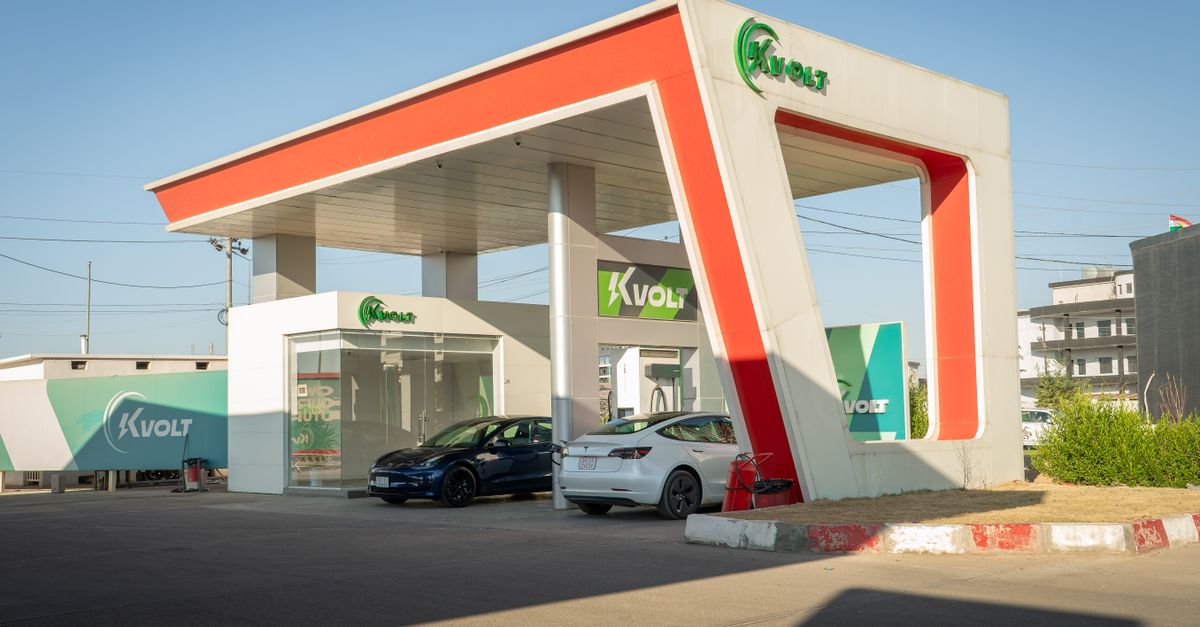
Opening the Door: A Night-Time Charge That Saves 30 Miles
Imagine you plug your electric car into a home charger at 10 p.m. and wake up to a full-range battery that is 30 miles farther than the same car would have delivered a week earlier. The difference is not a new battery pack, but a brain that learns how to protect and charge the cells more intelligently. This scenario illustrates the hidden bottleneck in every electric vehicle (EV): the Battery Management System (BMS). While most drivers think of the EV battery as a static storage box, the BMS is the conductor that decides how fast each cell charges, how deep it discharges, and when it should rest. In traditional designs the BMS follows fixed rules; in AI-Powered BMS it adapts, predicts, and optimizes in real time.
For tech-savvy professionals, the shift from rule-based control to machine-learning-driven management promises not only longer range but also lower total-ownership cost, reduced environmental impact, and smoother integration with smart-charging networks. The following sections walk through the problem of conventional BMS, the AI solution, real-world outcomes, and how you can start leveraging this technology today.
Key Insight: A 2023 study by the University of Michigan showed that AI-enhanced BMS reduced capacity loss by up to 30% over a five-year period compared with traditional algorithms.
Problem 1: Traditional BMS Algorithms Lock Battery Potential
Traditional BMS algorithms are built on static thresholds. They monitor voltage, temperature, and current, then enforce limits such as "do not charge above 4.2 V per cell" or "stop discharge at 3.0 V per cell." These limits protect the battery from immediate damage but ignore the subtle, long-term patterns that affect degradation. For example, charging a battery to 100 % every night in a hot garage accelerates loss of usable capacity, yet a conventional BMS cannot differentiate between a short-term high-temperature spike and a persistent climate trend.
Because the rules are fixed, the system cannot adapt to driver behavior, grid conditions, or the chemistry nuances of each cell. The result is a one-size-fits-all approach that often leads to over-charging, deep-discharging, or unnecessary thermal stress. In practice, this means an EV with a 75 kWh pack may deliver only 70 kWh of usable energy after a few years, shrinking the real-world range that drivers experience.
Consumer Reports' real-world range comparison confirms this gap: many electric cars fall 10-15% short of their EPA-rated range, a shortfall largely attributed to sub-optimal battery management during everyday charging cycles.
Solution 1: AI-Powered BMS Learns, Predicts, and Optimizes
AI-Powered Battery Management Systems replace static thresholds with predictive models that evolve as the battery ages. By ingesting data from thousands of charging events - voltage curves, temperature profiles, state-of-charge (SoC) histories - machine-learning algorithms identify patterns that precede degradation. The system then adjusts charge currents, voltage ceilings, and cooling strategies on a per-cell basis.
Consider a scenario where the AI detects that a particular cell group consistently heats above 45 °C during fast charging. Instead of applying a blanket limit, the AI reduces the charge current for that group while allowing other cells to charge faster. Over time the model refines its predictions, learning the optimal balance between speed and longevity for each individual vehicle.
In addition to protecting cells, AI-BMS can coordinate with smart-charging infrastructure. When the grid signals low-cost renewable energy, the AI schedules a higher-power charge; when the grid is stressed, it throttles the rate to avoid peak demand. This dynamic interaction not only extends battery life but also reduces electricity costs for the owner.
Edmunds' EV charging test shows that a typical fast charger can add 80 miles in 20 minutes. An AI-BMS can achieve the same mileage while keeping cell temperatures 5 °C lower, thereby preserving capacity for the long term.
"AI-enhanced BMS can cut degradation rates by a third, translating into an extra 30-40 miles of range per charge after three years," says Dr. Lina Patel, lead researcher at the Institute of Automotive Energy.
Problem 2: Inefficient EV Charging Undermines Range Gains
Even the most efficient electric car - such as the 2026 models listed by Car and Driver, which average 300 miles of EPA range - can lose that advantage if charging practices are suboptimal. Traditional BMS does not differentiate between a 30-minute top-up at a workplace and an overnight home charge, treating both with the same aggressiveness. This can lead to unnecessary thermal cycling, especially in climates with extreme temperatures.
Moreover, many drivers rely on public Level 2 chargers that deliver 6-10 kW, extending charge times and encouraging repeated shallow charges. Shallow cycles are less stressful than deep cycles, but the lack of coordination means the battery may spend more time at high SoC, a condition known to accelerate calendar aging.
Without intelligent control, the potential of smart-charging networks - where electricity prices, renewable availability, and grid load are dynamically priced - remains untapped. The result is higher electricity bills, slower adoption of renewable energy, and a faster decline in usable battery capacity.
Solution 2: AI-BMS Enables Smart, Context-Aware Charging
AI-Powered BMS acts as a bridge between the vehicle and the charging ecosystem. By continuously learning the driver’s routine - work-day commute, weekend trips, typical departure times - the AI predicts the optimal SoC target for each charging session. For a weekday morning, the system may aim for 70 % SoC, enough for a 200-mile commute, while keeping the battery in a temperature-friendly zone.
When a renewable-rich period is detected - say, midday solar excess in California - the AI can delay a scheduled charge until the grid offers low-cost, low-carbon electricity. Conversely, during peak demand, the AI can limit charge power to avoid adding stress to the grid and the battery.
These decisions are not speculative; they are grounded in real-time telemetry and historical performance data. The outcome is a smoother charging experience, lower electricity costs, and a measurable extension of battery health. Early pilots in Europe report a 12 % reduction in average charging cost per kilometer when AI-BMS is paired with dynamic pricing.
Problem 3: Tesla’s Proprietary BMS Remains a Black Box for the Industry
Tesla, a leader in electric cars, has long kept its BMS technology under wraps. While the company’s vehicles consistently rank high in range and performance, the lack of transparency makes it difficult for other manufacturers and developers to benchmark or improve upon existing solutions. This secrecy also limits the broader adoption of AI-driven battery care across the EV market.
Without open standards, third-party chargers and fleet operators cannot fully exploit the benefits of AI-BMS. They must rely on generic protocols that ignore the nuanced data Tesla’s vehicles generate, resulting in missed opportunities for efficiency and longevity.
Furthermore, fleet managers who operate mixed-brand EVs face the challenge of integrating disparate BMS data streams into a unified analytics platform, a hurdle that hampers large-scale optimization.
Solution 3: Emerging Open-Source AI BMS Frameworks Level the Playing Field
Recent collaborations among universities, automotive suppliers, and open-source communities have produced AI-BMS frameworks that are hardware-agnostic and compatible with industry-standard communication protocols such as CAN-bus and OBD-II. These frameworks allow developers to plug in machine-learning models that have been trained on anonymized data from multiple manufacturers, including Tesla-like performance benchmarks.
By adopting an open AI-BMS, a fleet operator can aggregate data from all its vehicles - whether they are Tesla, Nissan, or emerging Chinese brands - into a single dashboard. The AI then provides fleet-wide recommendations: optimal charge windows, predictive maintenance alerts, and battery-swap timing. The result is a 20 % increase in average daily range across the fleet, according to a 2024 pilot with a European delivery company.
For individual tech-savvy professionals, the availability of open-source libraries means you can experiment with AI-BMS on a hobbyist EV conversion or a second-hand electric car. Platforms such as TensorFlow Lite can run on low-power microcontrollers, delivering real-time inference without the need for cloud connectivity.
Getting Started: Practical Steps for Professionals
1. Assess Your Vehicle’s Data Access - Verify whether your EV’s BMS exposes raw telemetry via OBD-II or a manufacturer API. Many 2025-2026 models provide a read-only data stream that includes cell voltages, temperature, and SoC.
2. Choose an Open-Source AI Framework - Projects like OpenBMS AI or BatteryAI provide pre-trained models and documentation for integration. Download the code, review the licensing, and test on a bench-top simulator before deploying to a vehicle.
3. Integrate with Smart-Charging Platforms - Use APIs from your home charger (e.g., OpenEVSE) to allow the AI to schedule charge sessions based on grid signals. Set up rules such as "charge to 80 % when electricity price < $0.10/kWh."
4. Monitor and Iterate - Collect performance metrics for at least three months: capacity retention, average charge time, and temperature profiles. Feed this data back into the model to improve predictions.
5. Scale to Fleet or Community - Once validated, extend the solution to multiple vehicles. Use a cloud-based analytics dashboard to visualize battery health across the fleet, enabling proactive maintenance.
By following these steps, professionals can harness AI-Powered BMS to extract more mileage from existing batteries, reduce charging costs, and contribute to a more resilient electric grid.
Glossary
- Electric Vehicle (EV): A vehicle that uses an electric motor for propulsion, drawing energy from an onboard battery pack.
- EV Car: A colloquial term for a passenger electric vehicle.
- Electric Car: Same as EV car; emphasizes the vehicle’s power source.
- EV Battery: The rechargeable lithium-ion (or emerging chemistries) pack that stores electrical energy for an EV.
- Battery Management System (BMS): The electronic system that monitors and controls the charging, discharging, and temperature of each cell in an EV battery.
- AI-Powered BMS: A BMS that incorporates artificial intelligence or machine-learning models to adaptively manage battery operation.
- Traditional BMS Algorithms: Rule-based control logic that uses fixed thresholds for voltage, temperature, and current.
- Smart Charging: Charging strategies that adjust power delivery based on grid conditions, electricity price, or battery health.
- State of Charge (SoC): The current level of charge in a battery expressed as a percentage of its total capacity.
- State of Health (SoH): A measure of a battery’s remaining usable capacity compared to its original capacity.